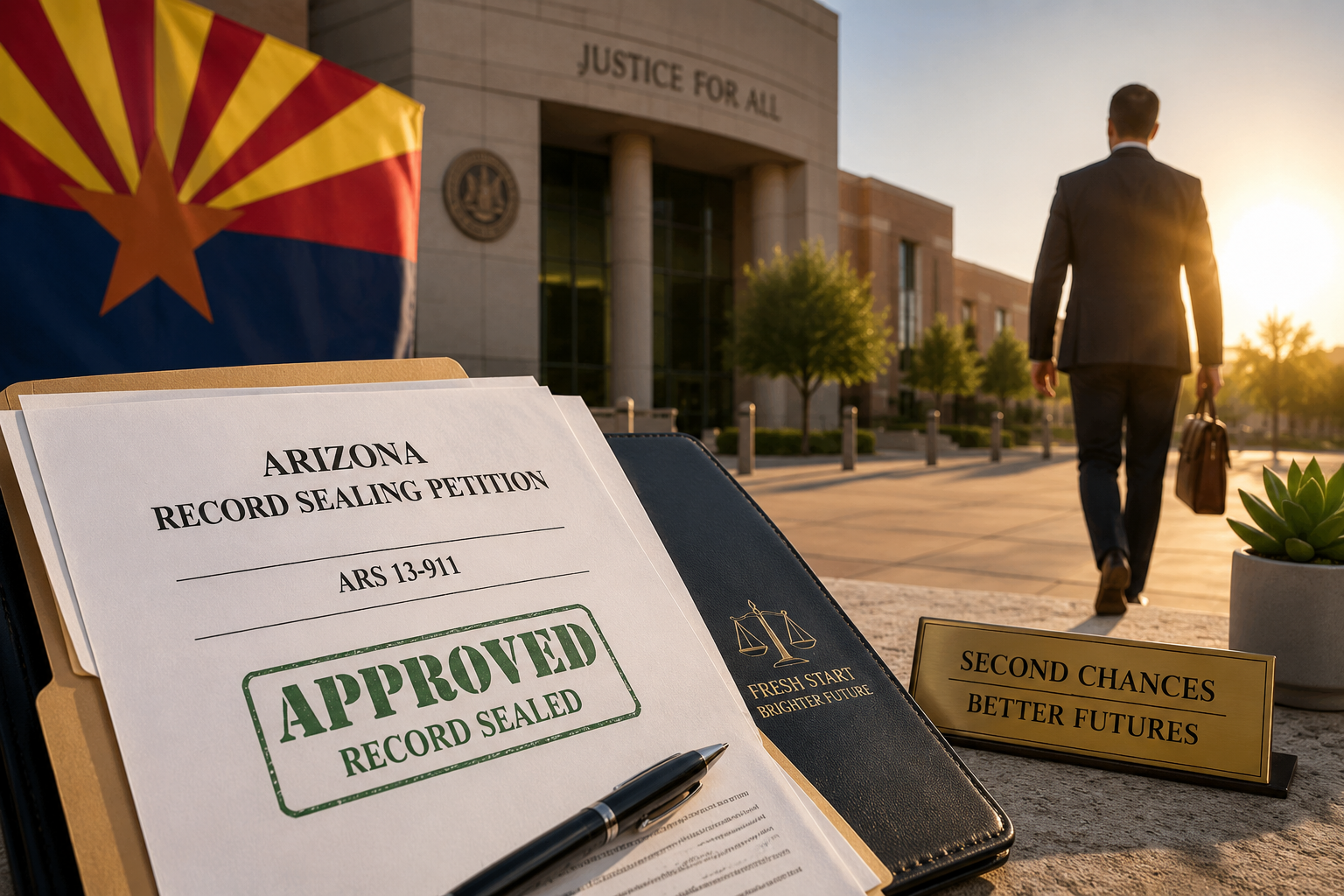
A Fresh Start: Understanding Arizona’s Record Sealing Law
For many years, individuals with a criminal record in Arizona faced significant challenges when applying for jobs, housing, loans, and educational opportunities. Even after completing all court-ordered requirements, a criminal record could continue to create obstacles for years.
Fortunately, Arizona enacted ARS 13-911, a law that allows eligible individuals to petition the court to have certain arrest, conviction, and sentencing records sealed from public view. This law provides qualifying individuals with a valuable opportunity to move forward with greater confidence and fewer barriers.
What Is ARS 13-911?
Arizona Revised Statute 13-911 allows eligible individuals to petition the court to seal records related to:
- Arrests
- Criminal charges
- Convictions
- Sentencing records
When a court grants a petition under ARS 13-911, those records are generally removed from public access. In many situations, the individual may legally state that they have not been arrested, charged, or convicted of the offense that was sealed.
Who Can Apply to Seal a Criminal Record?
Under ARS 13-911, you may be eligible if:
1. You Were Convicted of an Eligible Offense
You have completed all court-ordered requirements, including probation, incarceration, treatment programs, fines, fees, and restitution, and the required waiting period has passed.
2. Charges Were Dismissed
If criminal charges were filed against you but later dismissed, you may petition to have those records sealed.
3. You Were Arrested but Never Charged
Individuals who were arrested but never formally charged may also be eligible to seal those records.
Waiting Periods for Convictions
For individuals convicted of eligible offenses, Arizona law requires specific waiting periods after completing all non-monetary terms of the sentence:
| Offense Level | Waiting Period |
|---|---|
| Class 2 or Class 3 Felony | 10 Years |
| Class 4, 5, or 6 Felony | 5 Years |
| Class 1 Misdemeanor | 3 Years |
| Class 2 or 3 Misdemeanor | 2 Years |
All fines, fees, and restitution must be paid before filing a petition.
What Records Cannot Be Sealed?
Not every offense qualifies for record sealing. Arizona law excludes several categories of crimes, including certain:
- Dangerous offenses
- Dangerous crimes against children
- Serious violent felonies
- Crimes involving the discharge, use, or threatened use of a deadly weapon as an element of the offense
Individuals should review the statute carefully or consult with an attorney to determine eligibility.
What Happens After Records Are Sealed?
When a court grants a sealing petition:
- Court records are sealed.
- Law enforcement records are sealed.
- Arizona Department of Public Safety records are updated.
- Most public background checks will no longer reveal the sealed offense.
However, certain government agencies, courts, and law enforcement organizations may still access sealed records under limited circumstances.
ARS 13-911 vs. ARS 13-905: What’s the Difference?
Many people confuse record sealing with a “set aside” under ARS 13-905.
Record Sealing (ARS 13-911)
- Hides eligible records from public view.
- Provides stronger privacy protections.
- Allows many applicants to legally state they were not arrested, charged, or convicted of the sealed offense.
Set Aside (ARS 13-905)
- Does not remove the record from public view.
- Marks the conviction as having been set aside.
- The conviction may still appear during background checks.
For many individuals, sealing a record offers significantly greater relief than obtaining a set aside.
Benefits of Sealing Your Criminal Record
A sealed record can help improve opportunities in many areas of life:
Employment
Many employers conduct background checks. Sealing eligible records can help remove barriers during the hiring process.
Housing
Landlords often review criminal histories before approving rental applications. Sealed records can improve housing opportunities.
Education and Financial Aid
A sealed record may help reduce complications when applying for educational programs, scholarships, loans, and financial assistance.
Peace of Mind
Perhaps most importantly, sealing a record provides many individuals with the opportunity to move forward without being continually defined by a past mistake.
Final Thoughts
Arizona’s ARS 13-911 represents one of the most significant criminal justice reforms in the state’s history. For eligible individuals, it offers a genuine second chance by limiting public access to past arrests, charges, and convictions.
If you believe you may qualify, consider reviewing the statute carefully or consulting with a qualified Arizona attorney who can guide you through the petition process. A sealed record could open doors to employment, housing, education, and a brighter future.
Disclaimer: This article is for informational purposes only and should not be considered legal advice. Laws may change, and individual circumstances vary. Consult a qualified attorney regarding your specific situation.