Arizona Reform Question: Should All Criminal Cases Be Eligible for Sealing?
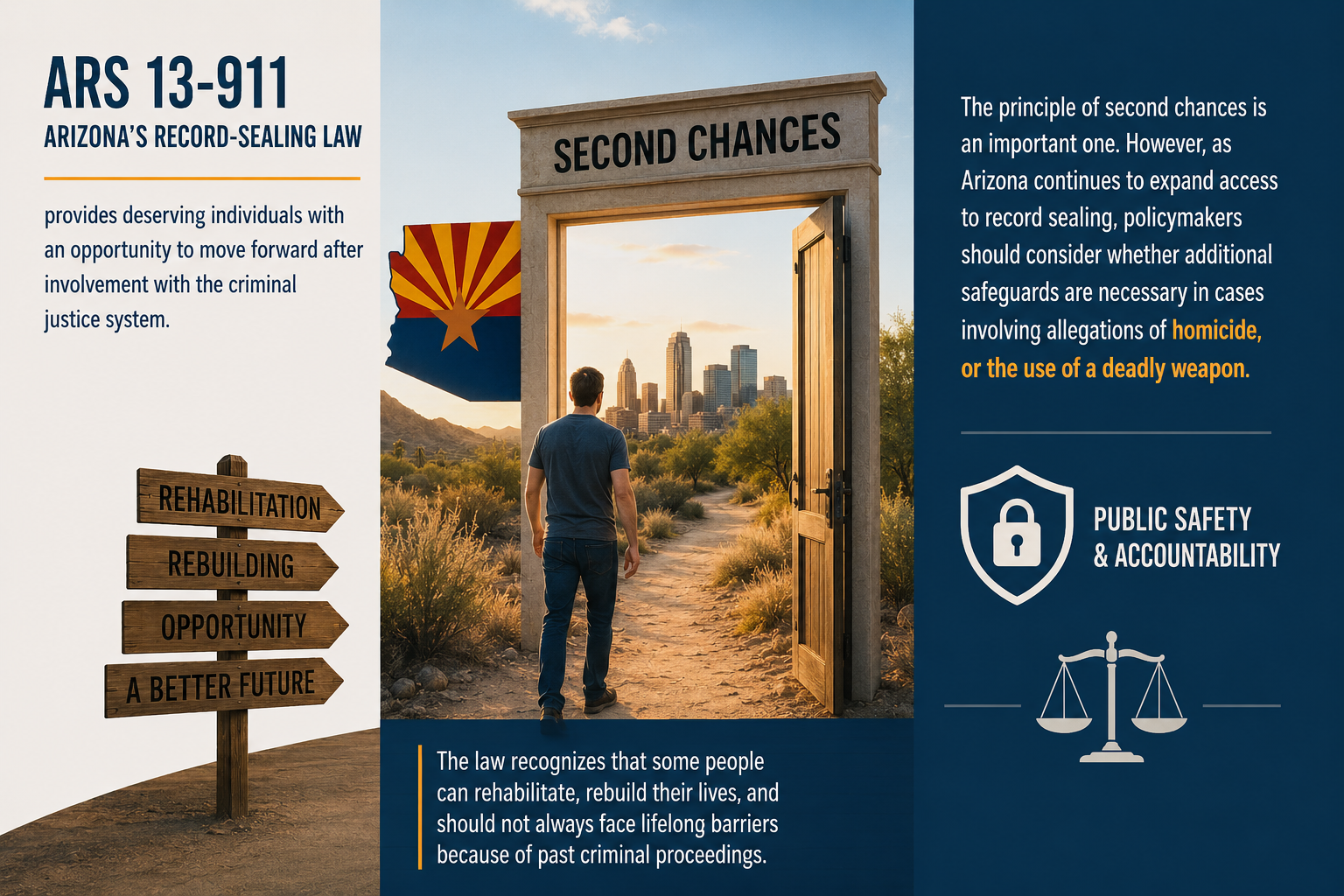
Arizona’s record-sealing law, ARS 13-911, was enacted to provide deserving individuals with an opportunity to move forward after involvement with the criminal justice system. The law recognizes that some people can rehabilitate, rebuild their lives, and should not always face lifelong barriers because of past criminal proceedings.
The principle of second chances is an important one. However, as Arizona continues to expand access to record sealing, policymakers should consider whether additional safeguards are necessary in cases involving allegations of homicide, or the use of a deadly weapon.
Balancing Privacy and Public Interest
Record sealing serves a legitimate purpose. It can help individuals obtain employment, secure housing, and move beyond past legal challenges. At the same time, certain criminal cases involve circumstances that raise broader public policy concerns.
When a criminal proceeding involves the loss of human life, lawmakers should consider whether the public interest in transparency may outweigh the benefits of complete confidentiality in some situations.
The question is not whether individuals deserve an opportunity to move forward. Rather, it is whether all categories of cases should be treated the same when courts evaluate requests to seal records.
questions deserve public discussion:
Should the Public Retain Access to Serious Criminal Proceedings?
Cases involving allegations of homicide or the death of another person often become matters of significant public concern. Should records related to these proceedings remain accessible to preserve public understanding of the judicial process?
Should Victims and Witnesses Receive Additional Protections?
Victims, surviving family members, and witnesses may continue to experience the impact of a criminal case long after a verdict is reached. If records are sealed, should additional safeguards exist to ensure these individuals are not disadvantaged in future legal disputes arising from the same events?
Should Courts Have Greater Discretion?
Arizona could consider providing judges with broader authority to deny sealing requests when transparency serves a compelling public interest. Rather than applying a one-size-fits-all approach, courts could evaluate the unique facts and circumstances of each case.
Should Records Remain Available for Future Civil Litigation?
Criminal cases sometimes give rise to future civil lawsuits involving the same underlying events. Policymakers may wish to consider whether records should remain accessible when necessary to ensure fairness and allow parties to defend themselves in subsequent litigation.
Should Arizona Address Potential Misuse of Sealed Records?
Another question is whether stronger safeguards are needed to prevent the selective use or misuse of information originating from sealed proceedings. Any reform effort should seek to protect the integrity of the judicial process while ensuring fairness for all parties involved.
A Potential Reform Approach
One possible solution would be to create heightened review requirements for requests to seal records involving homicide allegations, deaths resulting from criminal conduct, or the use of a deadly weapon.
Rather than creating a complete prohibition, courts could be required to conduct a more rigorous analysis that considers:
- The public interest in transparency.
- The interests of victims and surviving family members.
- The rights of witnesses in cases of retaliation.
- The need for future access to records in related future legal proceedings, especially family court matters involving child safety, parental rights, and best interest of the child.
- Evidence of rehabilitation and the applicant’s circumstances, including how many other cases have been sealed prior.
- A sealed case should be subject to review and possible unsealing when a party publicly discloses sealed records or selectively uses information from their sealed case in a manner that misrepresents the underlying facts and circumstances.
Such an approach would preserve the goal of second chances while recognizing that some cases involve unique public interests that warrant additional scrutiny.
Moving the Conversation Forward
This discussion is not about punishment. It is about ensuring that Arizona law appropriately balances rehabilitation, transparency, accountability, child safety, victim rights, witness protection, and public confidence in the justice system.
As Arizona continues to evaluate criminal justice reforms, lawmakers and community members should consider whether current record-sealing laws adequately address cases involving allegations of a homicide or homicide trial or cases involving the use of a deadly weapon , domestic violence allegations.
A fair justice system can support both second chances and accountability. The challenge is finding the right balance.
What reforms, if any, do you believe Arizona should consider regarding the sealing of serious criminal cases?